
Peptide buyer’s guide for Canadian research and innovation
How to choose a peptide supplier in Canada: nine checks before you buy.
Choose a supplier by checking published lot results, the cost of each single vial, shipping origin and written quality terms. GPC members can request Verification Program credit for eligible kit testing.
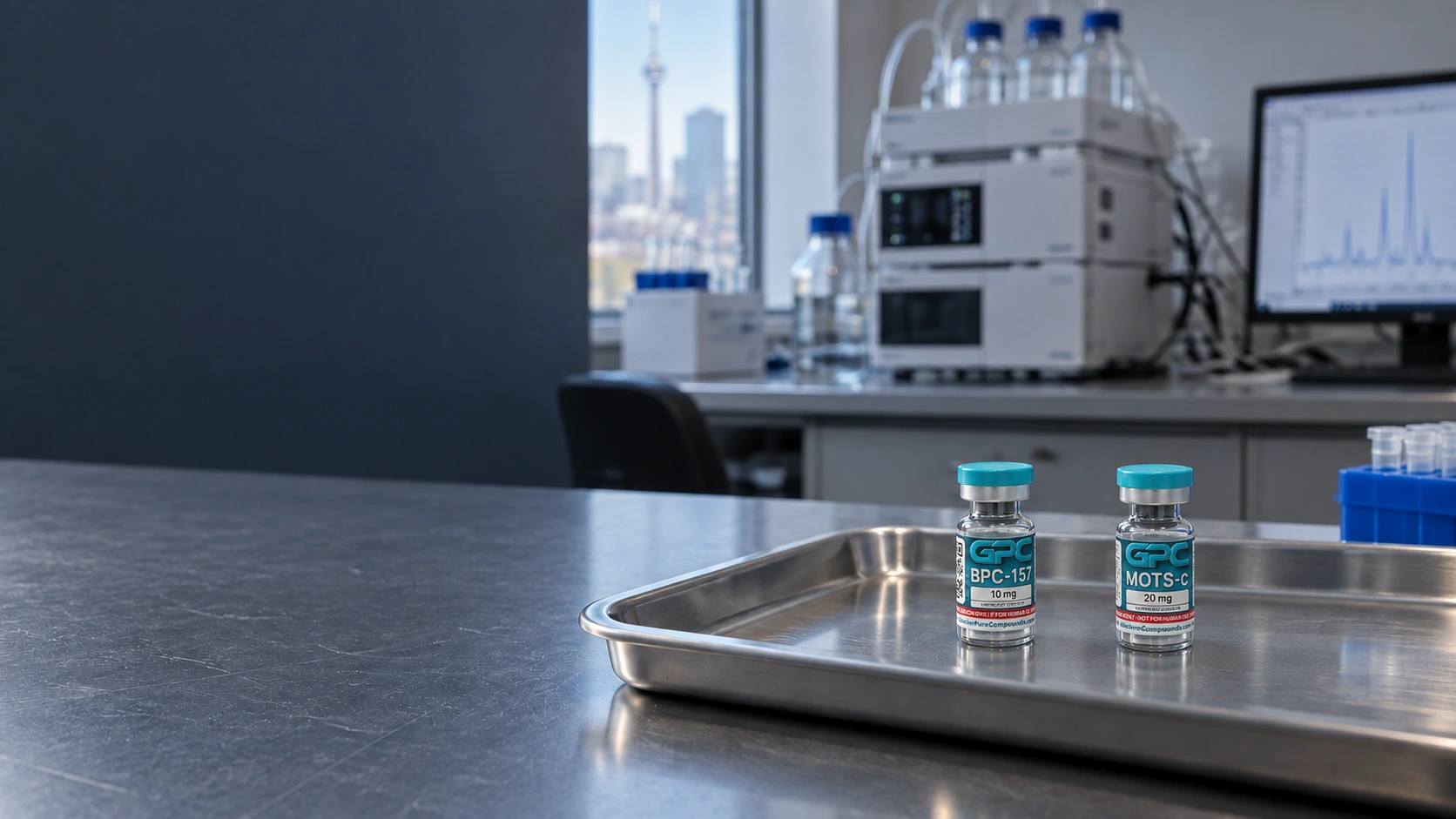
A buyer’s guide
How do you tell Canadian peptide suppliers apart?
Search for research peptides in Canada and the results blur together. High purity. Third-party tested. Research grade.
Those phrases cost nothing to write, and not one of them tells you what is actually in the vial you receive, or what your true unit cost is once you compare catalog sizes on the same milligram basis.
Three things do:
- Third-party testing results for every lot a seller may ship, with a way to match the vial in your hand to the results for its own lot.
- Detailed price-per-milligram figures up front, so your team can compare like with like. A vial labelled 20 mg is less straightforward than it looks: suppliers commonly price against rounded fill amounts, and reported net content can differ from a nominal catalog size. GPC publishes unit pricing from the nominal catalog amount and, where the source certificate includes net-content data, publishes the laboratory-reported value separately so your team can evaluate both.
- A written answer to the awkward question: what happens if an independent test disagrees with the supplier?
Glacier Pure Compounds answers all three in a clear and transparent way, before you spend anything. The rest of this guide shows you how to use them, on our catalog and on everybody else’s.
Know what you are comparing
What the market often offers, and what GPC publishes instead.
Plenty of Canadian suppliers are careful and honest. But there are patterns worth recognising before you send anyone money, and we would rather you learned them here than the expensive way.
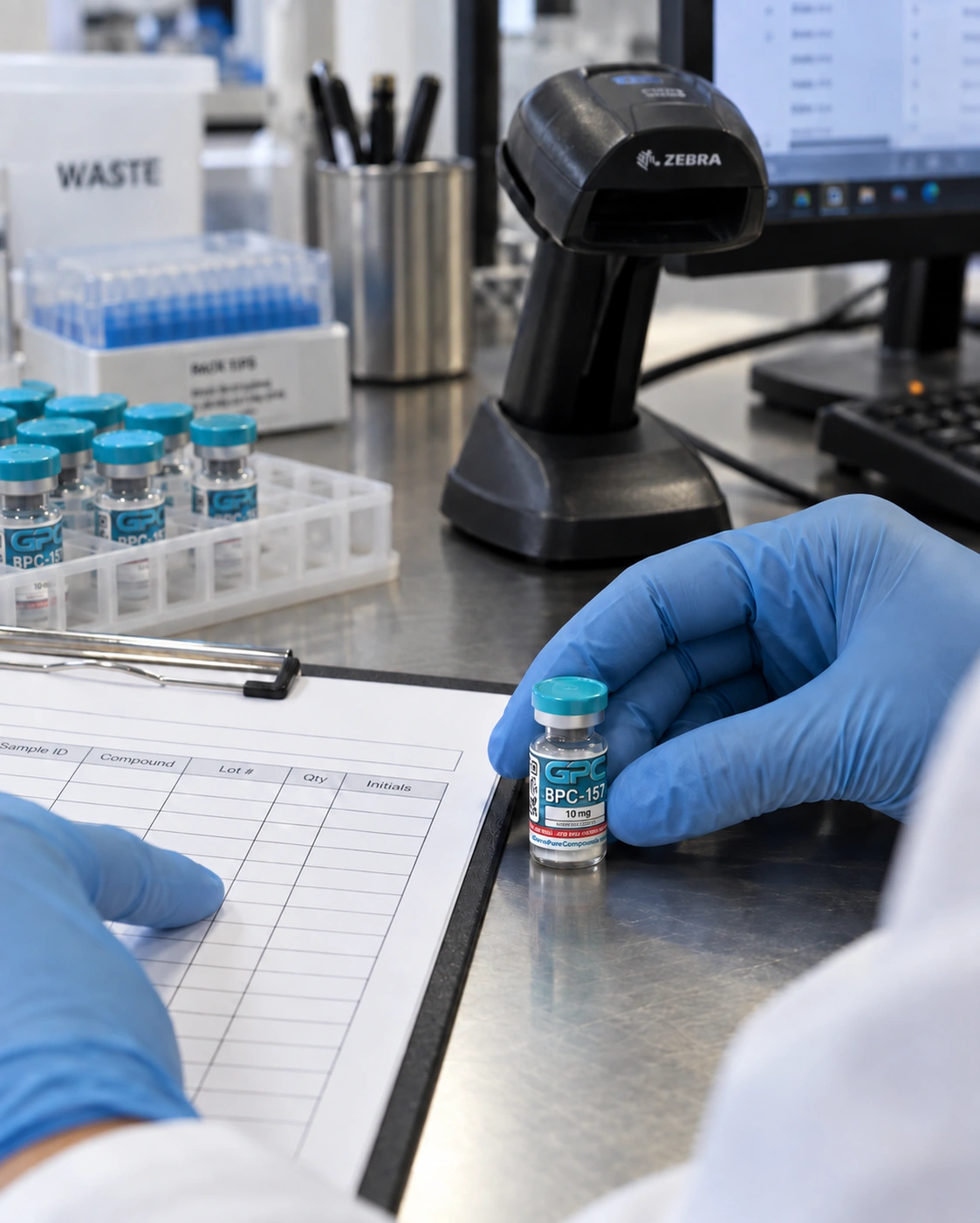
Test Results
Often in the market
One certificate on the homepage, or a purity figure with no document behind it at all. It may well describe a batch that sold out two years ago.
How GPC does it
Every product lot we offer publishes the available laboratory-reported results for its production batch, with the issuing laboratory named. The separate GPC Verification Program lets you commission analysis of a vial from your own order under written pre-approval.
Lot Identity
Often in the market
Nothing on the vial can be verified to map accurately to the testing data on the website. That critical link is at best a best-effort claim rather than a verifiable lot number tying the vial to its production batch and its testing results.
How GPC does it
A Canadian vial carries a GPC lot code linked to its published results.
Pricing
Often in the market
Vial pricing based on general vial amount values, with volume pricing that is complicated or absent altogether, leaving you to guess at the true per-milligram value you are getting.
How GPC does it
GPC shows single-vial prices and per-milligram cost. Kits are reserved for members.
Where It Ships From
Often in the market
A .ca domain and prices in Canadian dollars do not always mean a Canadian company and a Canadian shipment. Duty, brokerage and conversion all arrive after checkout, and all have to be counted into your delivery timelines and your full end-to-end cost.
How GPC does it
The public GPC store shows available single vials, their vial price and lot results. Membership gives access to kits through separate forms.
Failed Quality Tests
Often in the market
Most other suppliers have nothing in writing. The question is rarely answered, or the terms leave you with no refund process at all: stuck with research material you cannot use, and stuck with the bill for it.
How GPC does it
Members can request written pre-approval for independent testing of one vial from an eligible kit within 60 days of delivery. Eligible vial and approved laboratory costs are credited under the Verification Program Terms. If testing confirms a covered quality failure, GPC will reship or refund at its discretion, subject to applicable statutory rights.
What should a peptide supplier show you before you order?
Send these five questions to any Canadian peptide supplier you are considering, ours included. A good one will already have the answers on the page. If you have to ask, ask in writing, and notice how long the reply takes.
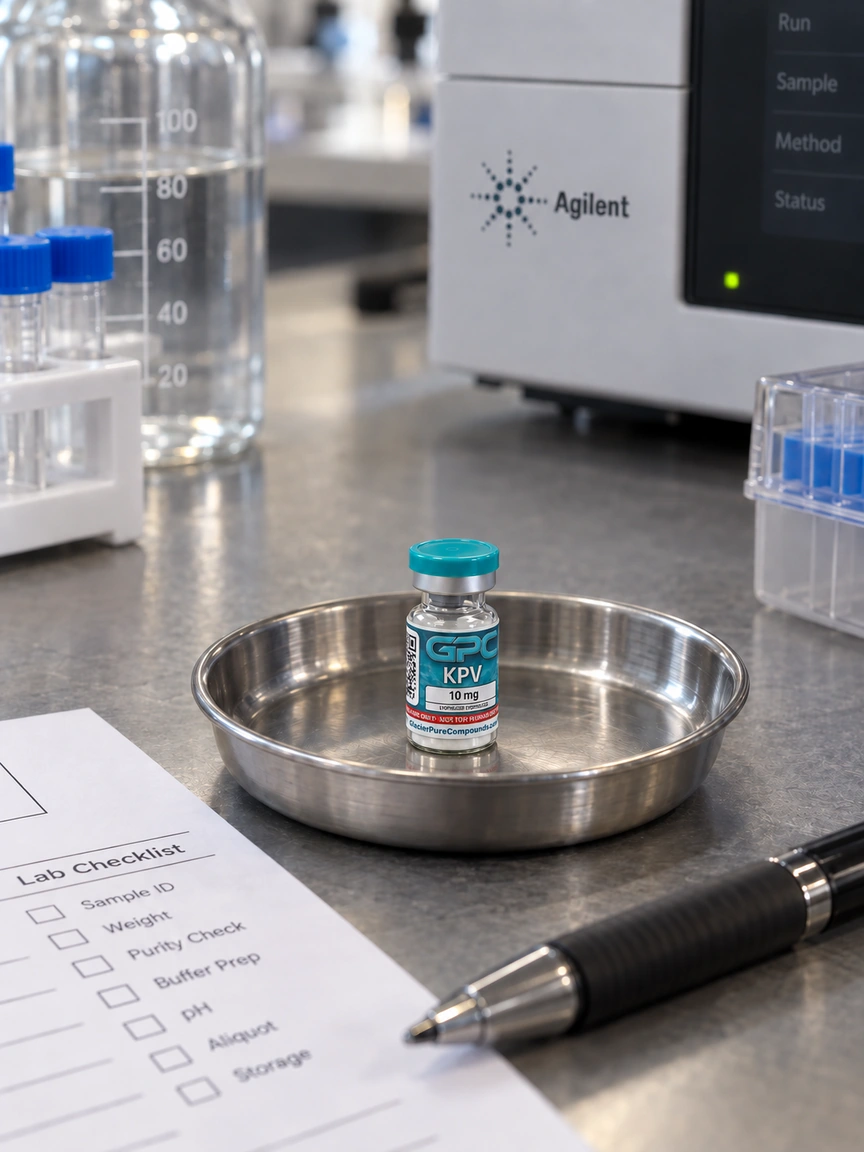
Which batch is this result from?
A laboratory result describes one production batch and nothing else. Ask whether the document belongs to the lot your vial will be filled from, and whether you can match that lot number once your order arrives. Canadian-warehouse vials carry a GPC lot number linked to the published results. International member kits use a dispatch record and supplier labelling.
Who issued it, and can I check?
A named laboratory can be looked up and asked. An unattributed screenshot cannot. It is a small question that separates real evidence from decoration, and GPC names the issuing laboratory on every published lot result.
What does it cost per milligram?
A vial price hides the fill size. Two vials at the same price are not the same purchase when one holds five times as much. Ask for the per-milligram figure, or work it out before you compare. GPC prints it beside the vial price so you do not have to.
Where does it actually ship from?
The public store ships available single vials from the Canadian warehouse. Members choose the Canadian warehouse or direct shipping from GPC International Distribution before checkout. International members are the importer of record and should review customs and forwarder risk before purchase.
What happens if it tests low?
Ask for the written quality process. Under GPC’s Verification Program Terms, an eligible member kit can receive approved testing credit. If testing confirms a covered quality failure, GPC will reship or refund at its discretion, subject to applicable statutory rights.
Nine checks to run on any peptide supplier.
Keep this beside a supplier’s website and tick the rows off one by one. The last column shows where GPC puts its own evidence, so you can run the same list on us.
| Check | What good looks like | Red flag | Where GPC shows it |
|---|---|---|---|
| Lot-specific findings | Findings for every lot a seller may ship, on pages tied to each lot. | One report on the homepage, or a purity figure with no document behind it. | Every lot offered for sale has a lot page with the available laboratory-reported findings. Look yours up by lot code. |
| A named laboratory and a date | The report names the laboratory that issued it and the date it was issued. | A screenshot with a logo but no laboratory name, report number or date. | Each published lot report names the issuing laboratory, and the batch data page lists the laboratory and report date beside every lot. |
| A report that ties to the vial | The lot number on the report matches the lot number printed on your vial, so the check takes seconds. | No lot number on the document, or one you cannot match to the vial in your hand. | A GPC lot number and QR code are printed on every Canadian-warehouse vial and lead to that lot’s published reports. Lot lookup takes you there by code. |
| A way to check it at its source | A report number or search code you can take to the laboratory, rather than a file you must take on trust. | A file nobody can trace, or one the seller will not let you confirm. | Where the manufacturer’s lot is listed on the COA Coalition, the lot record links the original certificate and shows its search code. Other lots carry a GPC summary of the manufacturer’s test, with the laboratory named. The COA guide shows how to confirm a report. |
| Measured content, not only a purity figure | The report gives the milligrams measured in the vial as well as a purity figure, and keeps the two apart. | A purity figure on its own, with nothing on how much peptide is actually in the vial. | The published batch data page sets measured content against the label amount, lot by lot, for each lot whose report gives one, and shows the report’s purity figure in a separate column. |
| Price per milligram | A price per milligram next to the vial price, with volume pricing you can see without asking for a quote. | Prices only by kit size, volume rates “on request”, or fill sizes that make comparison hard. | Every public GPC product page shows the single-vial price and cost per milligram. The pricing guide works through the arithmetic. |
| Where it ships from and how it is packed | A stated shipping origin and lead time, a landed price with no surprises after checkout, and a plain account of how material is held and packed before it ships. | A .ca address with no word on where the parcel really starts, or duties and brokerage that arrive after checkout. | Public orders ship from GPC’s Canadian warehouse. Product pages show which fills are in stock and offer Notify me for unavailable fills. The shipping page explains timing and what to check on arrival. |
| What happens if a vial tests low | A written answer, before you order, that says what is credited or refunded. | Nothing in writing, or terms that leave you holding the bill. | The Verification Program is written down. With pre-approval, GPC credits one tested vial and approved laboratory fees. For a verified failed-COA member kit, GPC may reship or refund at its discretion, subject to mandatory legal rights. |
| Plain research-use labelling | Material described as laboratory research material, with no claims about health, performance or outcomes anywhere on the site. | A “research” label sitting beside talk of wellbeing, appearance or performance. | GPC offers its materials for qualified laboratory work only, not for personal use or for use in or on people or animals. The legal guide explains what a research-use label does and does not mean. |
A report describes one batch rather than every vial, and a missing answer is a question to ask in writing, not proof of bad faith.
What does a certificate of analysis actually prove?
A COA is genuinely useful and genuinely limited, and knowing where that line falls is most of the skill. We publish lot results without pretending they describe the particular vial in your order. That is the honest version, and it is exactly why the verification program exists.
Something real about one batch
A laboratory reports what it measured in the sample it received, on the day it measured it. For the batch it names, that is solid information you can weigh before ordering, and a great deal more than a homepage adjective.
Anything about the vial in your hand
Your vial was not the sample analyzed. The result travels with the batch, not the vial, and says nothing about storage, transit or handling afterwards. A supplier who tells you otherwise is overselling the document.
A document with no lot identity
If nothing connects the certificate to a lot number you can read on the vial, the link is being asserted rather than shown. That is the document to set aside, and the supplier to ask one more question.
Eight red flags to look for before you order.
None of these proves a supplier is dishonest. Each is a reason to slow down, ask a plain question in writing and wait for a plain answer before you order.
A report with no lot identity
If nothing on the document connects it to a lot number you can read on the vial, the link is being claimed rather than shown. Ask which lot the report describes and how you would match it to your vial.
One report stretched across many products
The same document offered for several products, strengths or years describes, at most, one thing. A report names one compound, one lot and one date. If those do not fit the product in front of you, set it aside.
A purity figure with no measured content
A purity figure says how much of the signal belongs to the intended peptide. It does not say how many milligrams are in the vial. A supplier who shows one without the other is answering half the question.
Findings you cannot check at their source
A report you can take back to the laboratory that issued it, by report number or search code, is evidence. A file nobody can trace is decoration, however professional it looks.
Health or outcome words beside a research label
A label that says research while the page talks about recovery, appearance, wellbeing or performance is saying two things at once. Read the whole page, because the law reads the whole page.
A price per milligram that is hidden or kit-only
If you can see only a price per kit, or must ask for a quote to learn the volume rate, you cannot set it beside another supplier’s. A price you cannot see is a price you cannot compare.
No statement of where it ships from
Prices in Canadian dollars and a .ca address do not tell you where a parcel starts. If the page does not say, duties, brokerage and delays can arrive after checkout.
Usage instructions next to the products
Pages that explain how a product should be taken, how often, or which products to combine for a personal goal say what the product is meant for. The law looks at what a product is sold or represented for, and a seller’s own instructions are part of that. A research label does not undo it.
How do you compare peptide prices per milligram?
Fill sizes vary between suppliers and between products, so a vial price on its own tells you very little. A 5 mg vial at $40 and a 10 mg vial at $60 look like a $20 gap. Per milligram they are $8.00 and $6.00, so the higher sticker price is the better buy by a quarter.
Compare vial price, per-milligram cost, tax and shipping. Members can review kit prices on their member-only forms.
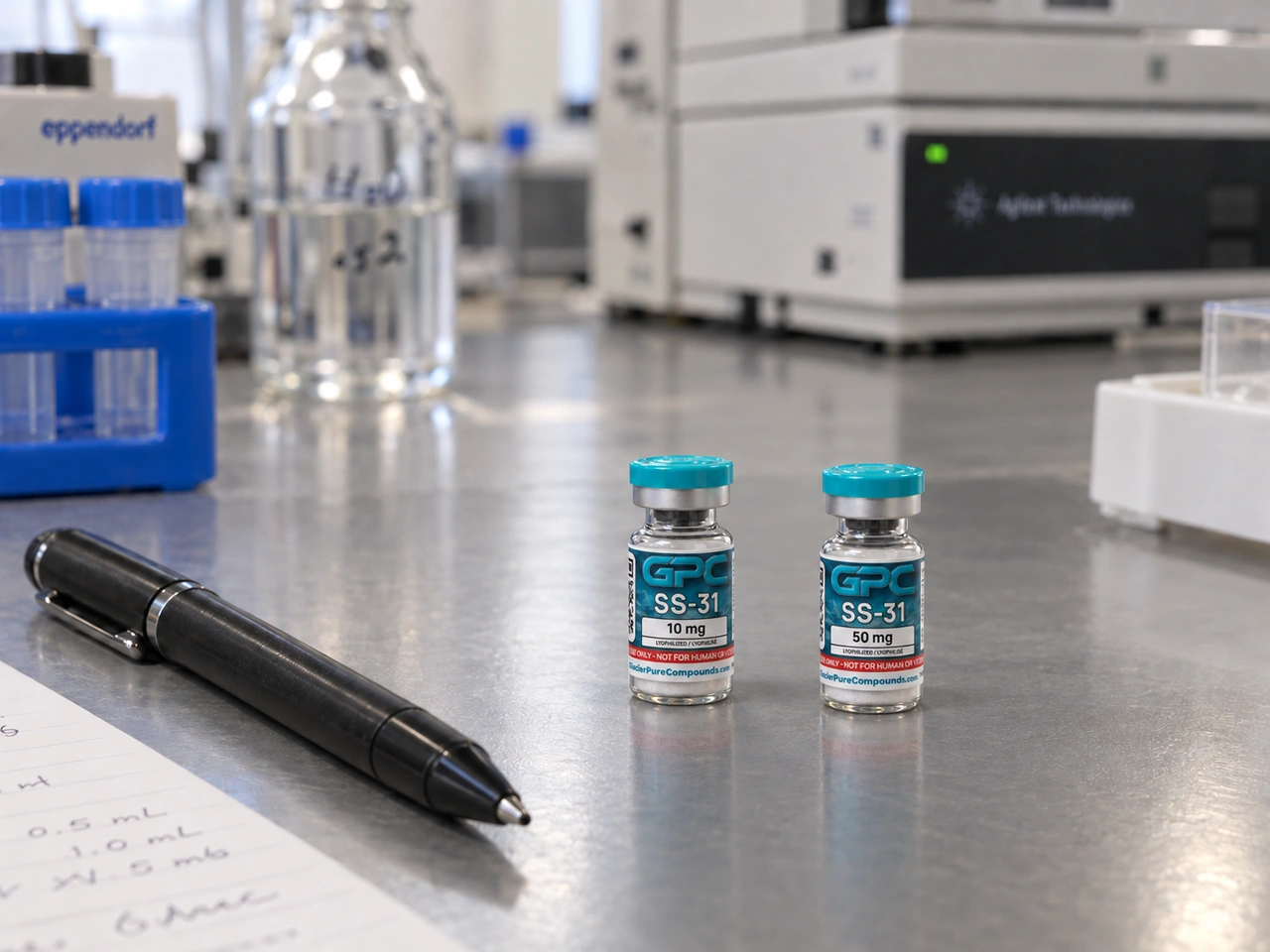
Why buy research peptides from a Canadian supplier?
Buying domestically is not sentiment. It changes the timeline, the landed cost, and who picks up the phone when something needs sorting out. A domestic shipment does not meet a border examination. That is logistics, not a finding that the product is outside Health Canada’s reach.
A Canadian company, a domestic shipment
The public GPC store shows available single vials, their vial price and lot results. Membership gives access to kits through separate forms.
The landed price is the real price
Import duties, brokerage and currency conversion all land after the checkout total. A lower overseas list price can finish higher once the order actually arrives. With GPC, the number you compared is the number you pay.
Someone who answers
A Canadian seller is a Canadian legal entity, subject to Canadian consumer and advertising law, reachable in your own time zone and language. When something needs fixing, that matters more than it sounds like it should.
After your order arrives
How should research peptides be stored after delivery?
Cold-chain handling is the one part of quality a supplier cannot do for you. Once the package is signed for, storage and handling are what keep the material matching the results published for its lot, and they are the first variables an outside analysis will pick up. Four things to get right:
- 01
Check the lot number first
For Canadian-warehouse vials, match the printed GPC lot number against the published results. International member kits use supplier labelling and a dispatch record instead of a GPC lot code. If a package arrives damaged, photograph it and email GPC within 14 days.
- 02
Keep it cold and keep it dark
Lyophilized material is held in the GPC Canadian warehouse at −20 °C or colder and shielded from ambient light. Matching those conditions in your own facility is the simplest way to keep what you received in the state it arrived.
- 03
Limit the freeze-thaw cycles
Every warm-up and refreeze is another handling variable working against you. Take out what a session needs, return the rest promptly, and let a vial come to temperature slowly rather than forcing it.
- 04
Analyze within the program window
Storage, transit and handling all sit between a batch result and your bench. Obtain written pre-approval and schedule the analysis so the final report is dated less than 60 days after delivery. Within that window, testing close to the planned research work makes the result more representative of the material at that point in time.
How do you verify the vials you actually received?
If you need evidence about a vial in your order rather than only the production batch, send a pre-approved vial to a laboratory. That result describes the tested vial at the time of analysis; it does not warrant the other vials in the order. No published batch document can describe that tested vial directly, ours included.
Most suppliers would rather you did not bother. We pay for it. Arrange pre-approval, send a vial, and GPC credits the vial plus approved laboratory fees to your account toward a future order. Testing in-house instead? You still get the vial credit. We would rather you checked than took our word for it, and the results you send back make the lot evidence stronger for every researcher who orders after you.
Go deeper
Three guides, one decision each.
The public GPC store shows available single vials, their vial price and lot results. Membership gives access to kits through separate forms.
For the laboratory
Eleven guides and a calculator for laboratory work.
Reference guides for researchers and technicians cover labels, stability, independent analysis and teaching chromatography. The Solution preparation series follows a laboratory stock solution from the first solvent to storage, with a concentration and dilution calculator. Start with the complete guides directory or the stock-solution guide.
What is actually on the shelf
What is listed in the GPC catalog?
Every listing in the GPC catalog is a named compound in one or more fill sizes, each tied to a production lot with published results and a lot number printed on the vial. Formats, availability, the vial price and the cost per milligram are on each product page before you order.
Compounds listed by name
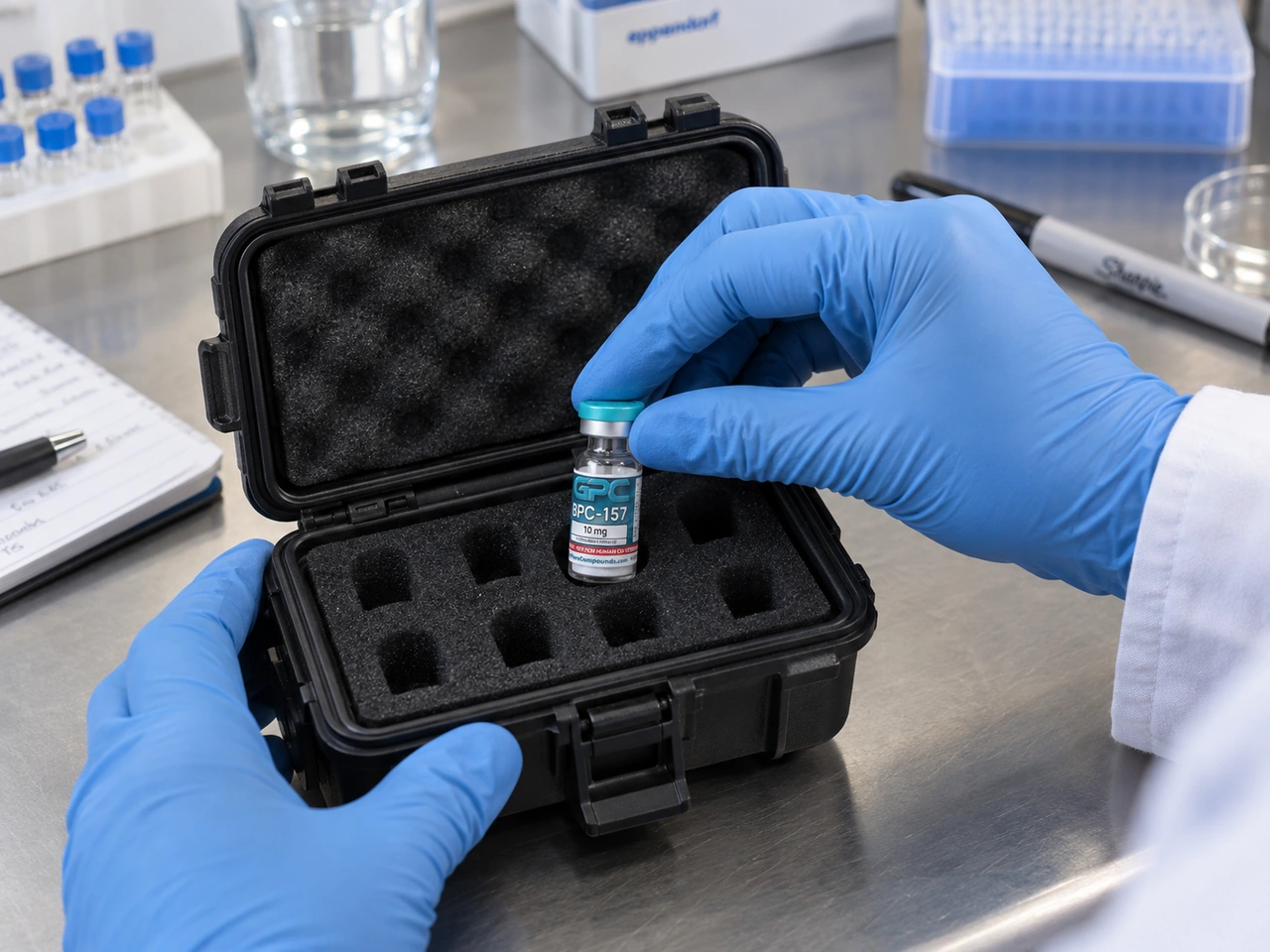
BPC-157, GHK-Cu, MOTS-c, SS-31, NAD+, Epithalon, KPV, AOD9604, Kisspeptin-10 and DSIP each have their own product page, their own lot number and their own published batch results.
More than one format per compound
Many listings publish several fills, so a 10 mg vial and a 50 mg vial of the same compound sit side by side with the cost per milligram shown for each. The larger fill is usually the lower unit cost.
Member-only kits
Premium and VIP members order ten-vial kits through separate forms.
Multi-component listings
Some listings are supplied as blends under a GPC name, with each component and its strength stated on the product page and the same lot evidence standing behind them.
The public GPC store shows available single vials, their vial price and lot results. Membership gives access to kits through separate forms.
Questions buyers ask about choosing a supplier.
How do I choose a peptide supplier in Canada?
Start with evidence, not adjectives. Ask for findings for every lot the seller may ship, from a named laboratory, with report dates and lot numbers you can match to each delivered vial. Then compare price per milligram, where the parcel ships from and what is written down about a failed test. The checklist above puts those questions in one place, and you can run it on any supplier, GPC included.
What should a lot-specific report show?
At minimum: the laboratory’s name, a report number or search code, the date, the compound and the lot number. Then what was measured and how, such as identity, a purity figure with its method and the measured content in milligrams. A report without a lot number or a laboratory name cannot be tied to your vial or checked by you. Keep in mind that it describes the sample the laboratory received from that batch, not every vial.
What is the difference between purity and content?
A purity figure compares the signal for the intended peptide with everything else the detector saw. Content is how many milligrams of that peptide a laboratory measured in the vial. A powder also holds water and counterions left over from synthesis, so a high purity figure can sit beside a lower net peptide content, and the amount on the label is a nominal fill rather than a measurement of peptide. The net content guide explains both.
Does a “research use only” label make a peptide legal to sell?
No. A research-use label tells you what purpose a seller offers the material for. It is not a safety rating or an approval, and it does not remove legal requirements. Health Canada’s April 2026 advisory about unauthorized peptide drugs sold online says research-use labelling does not make those products legal or remove regulatory requirements. The law looks at what a product is made, sold or represented for, including the seller’s own words, images and instructions. Our legal guide sets out the sources. It is general information, not legal advice.
Are Canadian suppliers better?
Not because of the chemistry. A Canadian address does not change how a peptide was made, and the material may still be manufactured abroad. What a Canadian supplier can change is logistics: a domestic shipment, a price in Canadian dollars, no duties or brokerage landing after checkout, and a company you can reach in your own time zone and language. A parcel that does not cross a border is also not exposed to customs delays. That is shipping, not a finding about a product’s regulatory status, so check where the parcel really ships from.
How can I check a laboratory report?
Look for the laboratory’s name, the report number and the date. Then use the laboratory’s own public lookup if it has one, or contact it through details you found yourself rather than ones printed on the document. Match the lot number to the one on your vial. A report can be copied, edited or attached to a newer lot it never described, so a logo on a screenshot is not enough. On GPC lot pages, a lot listed on the COA Coalition links the original certificate and shows its search code, and other lots carry a summary of the manufacturer’s test with the laboratory named.
What should I do if a vial tests low?
Keep the vial, its packaging and your records, then write to the supplier with the report, the lot number and the method used. Do not send anything back unless the supplier gives written instructions. One measurement can reflect the method or the storage as well as the product, so note both. At GPC, eligible member kits can receive a vial and approved testing credit with written pre-approval. For a verified failed-COA member kit, GPC may reship or refund at its discretion, subject to mandatory legal rights. Get pre-approval before you send a vial for analysis.