
The GPC Quality Standard
Quality you can trace. Confidence you can test.
From supplier review to the lot number on your vial, every checkpoint is designed to give research and procurement teams evidence they can inspect before ordering.
Published results are the laboratory-reported values for the identified production batch. The GPC lot number keeps those results connected to the vial you receive.
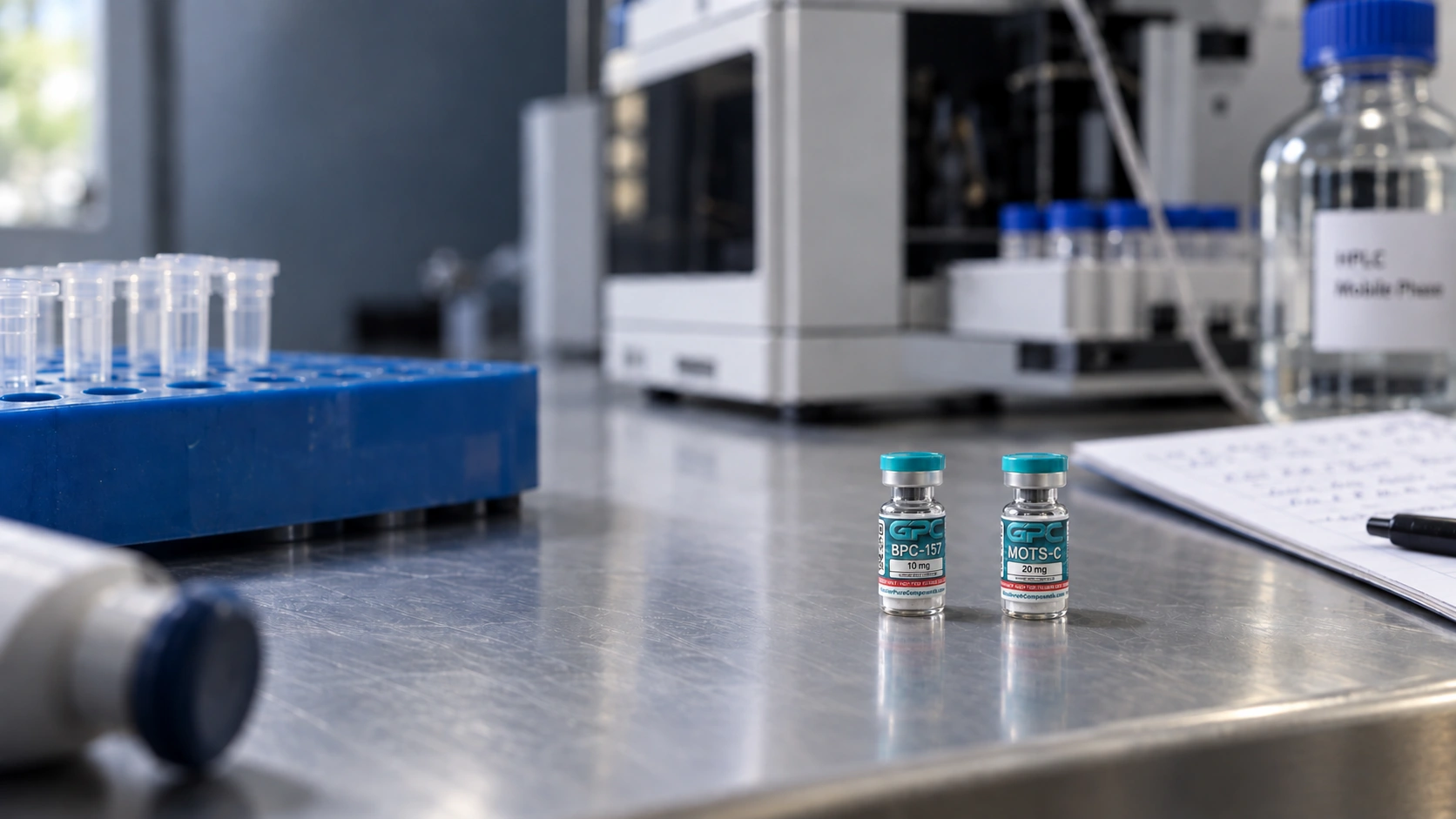
Source-to-Vial Verification
The GPC Quality Trail
GPC reviews the sourcing, testing, inventory and lot-identification evidence within its control before a product reaches your research bench.
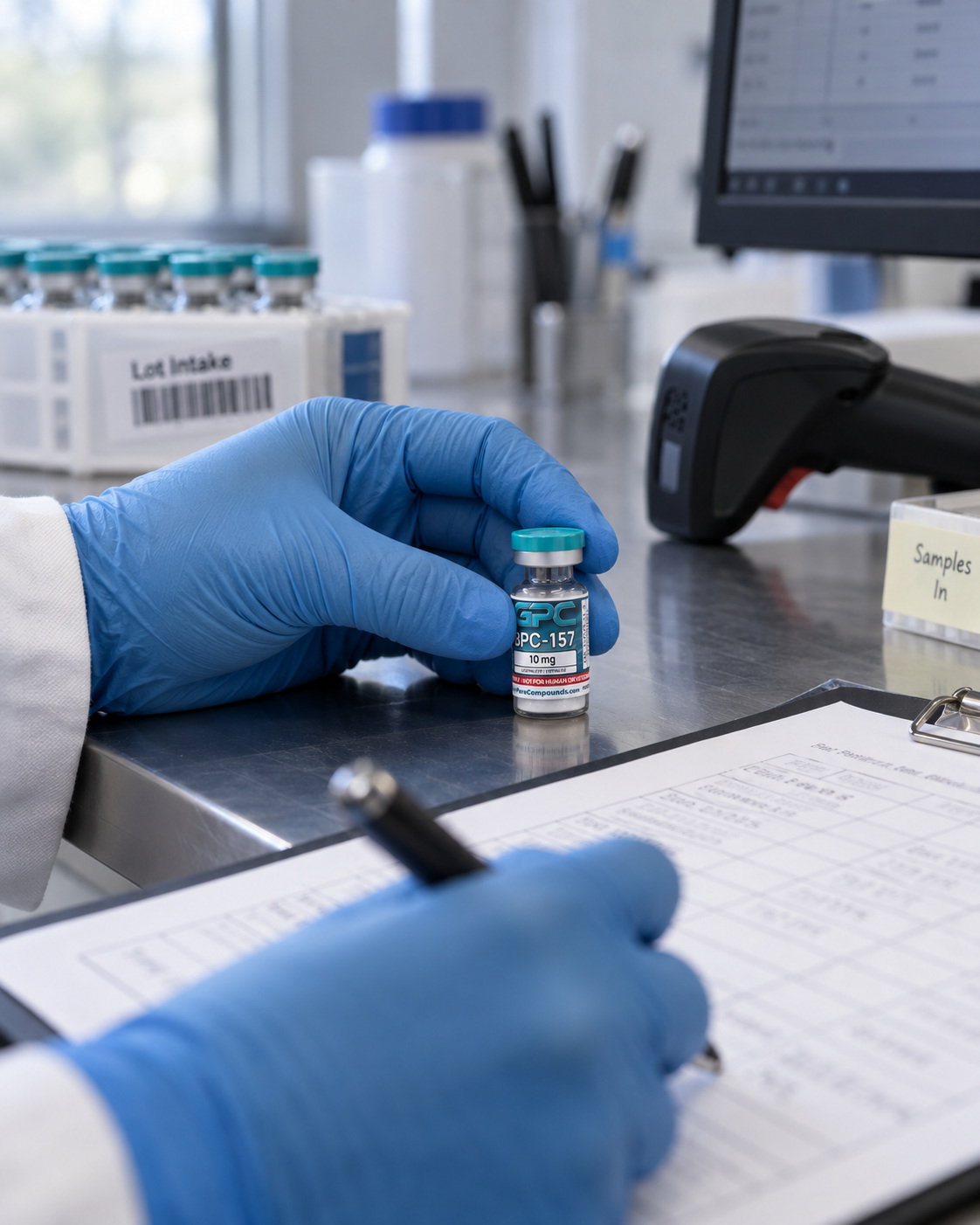
It starts with source verification
GPC follows strict source-verification protocols, assessing each manufacturer’s quality-control systems, facility practices, long-term consistency, production-lot history, supporting test data and supply reliability. Few sources make the cut.
Review the production-lot evidence
A general quality claim is not enough. We review the available results issued by the laboratory engaged by the manufacturer for the production batch being considered, and apply GPC’s inventory acceptance standard to the reported values.
Enforced acceptance standard
If the certificate of analysis reports purity below 99.00%, that supplier’s production lot does not enter GPC inventory. This is the same purity threshold used by the GPC Verification Program. Batch and later vial test results can differ; the reported batch result does not establish the result for every vial.
Protection of accepted inventory
Accepted inventory at GPC’s Canadian warehouse is stored at −20 °C or colder and protected from ambient light to help preserve product stability and minimize quality degradation before delivery.
Transparent data before you purchase
GPC product and lot pages publish testing data for procurement and research teams to evaluate before ordering, helping you determine whether the available products meet your research specifications.
Lot information tied to the vial
The lot number and QR code on each Canadian vial lead to its lot results. International kits are traced by dispatch record.
Customer verification
Trust, but verify. GPC stands behind its quality controls, but manufacturing, vial filling, shipping, storage and handling can introduce variation. The strongest point-in-time evidence is a test of the vial in your own hands. The GPC Verification Program helps customers arrange independent third-party testing before research use and provides eligible account credit under the program terms.
Evidence you can use
Review it before you order. Verify it after it arrives.
The GPC Quality Standard supports both sides of the purchasing decision:
- Transparent lot information up front
- A practical path to independent testing afterward
- Testing laboratory
- The lab the manufacturer used for this batch, named.
- Identity and batch
- Which compound, and which production run it came from.
- Purity, and how it was measured
- The reported value, and the method that produced it.
- Chromatogram
- The separation trace behind the number. A purity figure quoted without one is a claim, not a result.
- Mass confirmation and date
- Confirms the molecule is the one the identity row names.
Compare the lot data
Review the named laboratory, report date, analytical methods and results table published for the available lot.
Test a vial from your order
With pre-approval, GPC credits the tested vial and eligible third-party laboratory fees to your account. Qualified in-house testing receives the vial credit.
A clear process for failed tests
A validated failure on identity, net content, purity below 99.00%, or a covered optional panel starts a quality review. For a verified failed-COA member kit, GPC may reship or refund at its discretion, subject to mandatory legal rights.
A customer result can add context
A validated customer-initiated result may be added to the applicable lot page when its use is licensed. It describes the tested vial and does not warrant the untested vials in that lot.