
A practical guide to commissioning analysis
Getting a peptide vial analyzed in Canada.
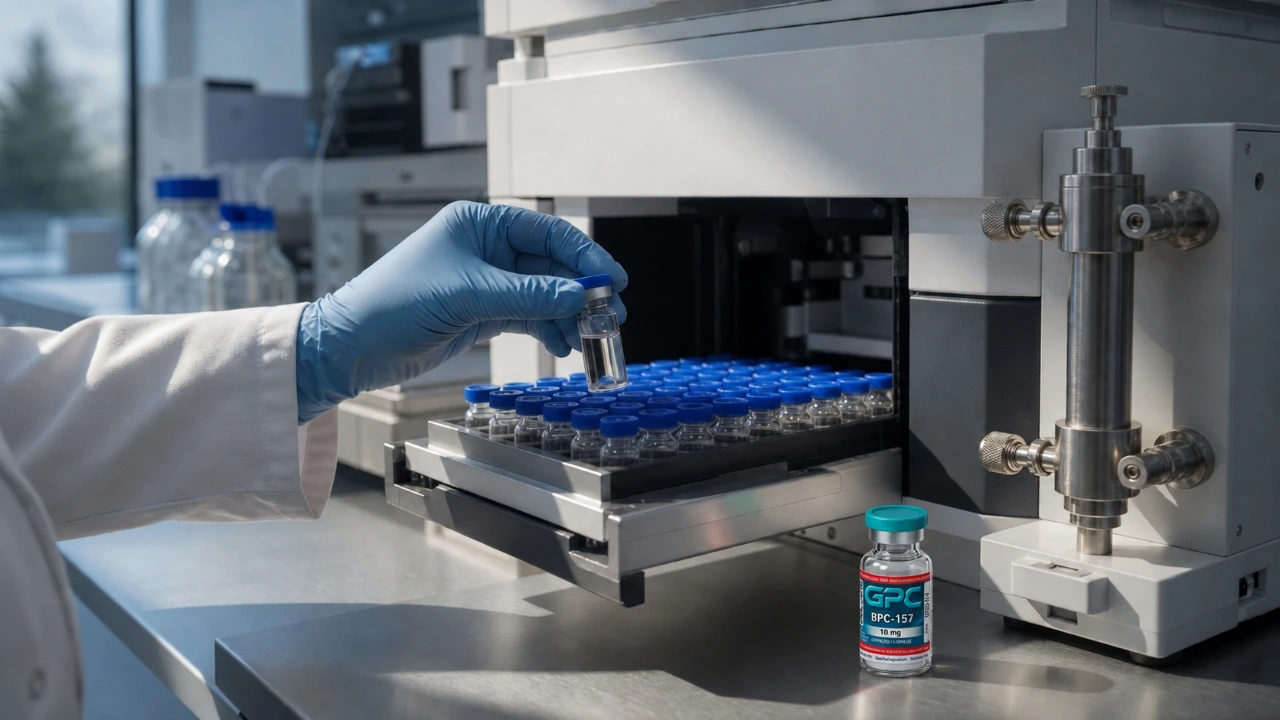
A supplier’s certificate describes a sample from a production batch. When your work depends on the material you actually received, the next step is to have a vial from your own order analyzed. This guide explains which tests to ask for, how to choose a laboratory, how to prepare the sample and what the report can tell you.
For laboratory research use only. Not for human or veterinary use.
In this guide
Why have a vial from your own order analyzed?
Because a batch result and your vial are not the same sample.
A certificate describes what a laboratory measured in one sample from a production batch, on the day it measured it. Your vial was filled from that batch, then stored, labelled, packed and shipped. Analysis of the vial in your hand adds evidence about the material you will actually use, close to the time you will use it.
Commissioned analysis is most useful when:
- your method depends on a known amount, so the milligrams in the vial matter as much as its identity;
- you are starting a study and want a documented baseline for the material;
- your organization’s quality system requires incoming material to be checked; or
- something about a vial, its label or its package does not look right.
The vial you send stays sealed. A solution prepared from it is no longer the original vial a laboratory can tie to your lot, so stock solutions for your own method are prepared from the other vials.
Which tests should you ask a laboratory for?
Laboratories group tests into panels. Three answer the questions most research buyers have; the others are added when a method or a quality system calls for them.
Is it the labelled peptide?
Usually LC-MS: the measured mass is compared with the mass expected for the sequence. Ask for the observed and expected masses and the charge states used, not only a pass mark.
How much of the signal is the main peak?
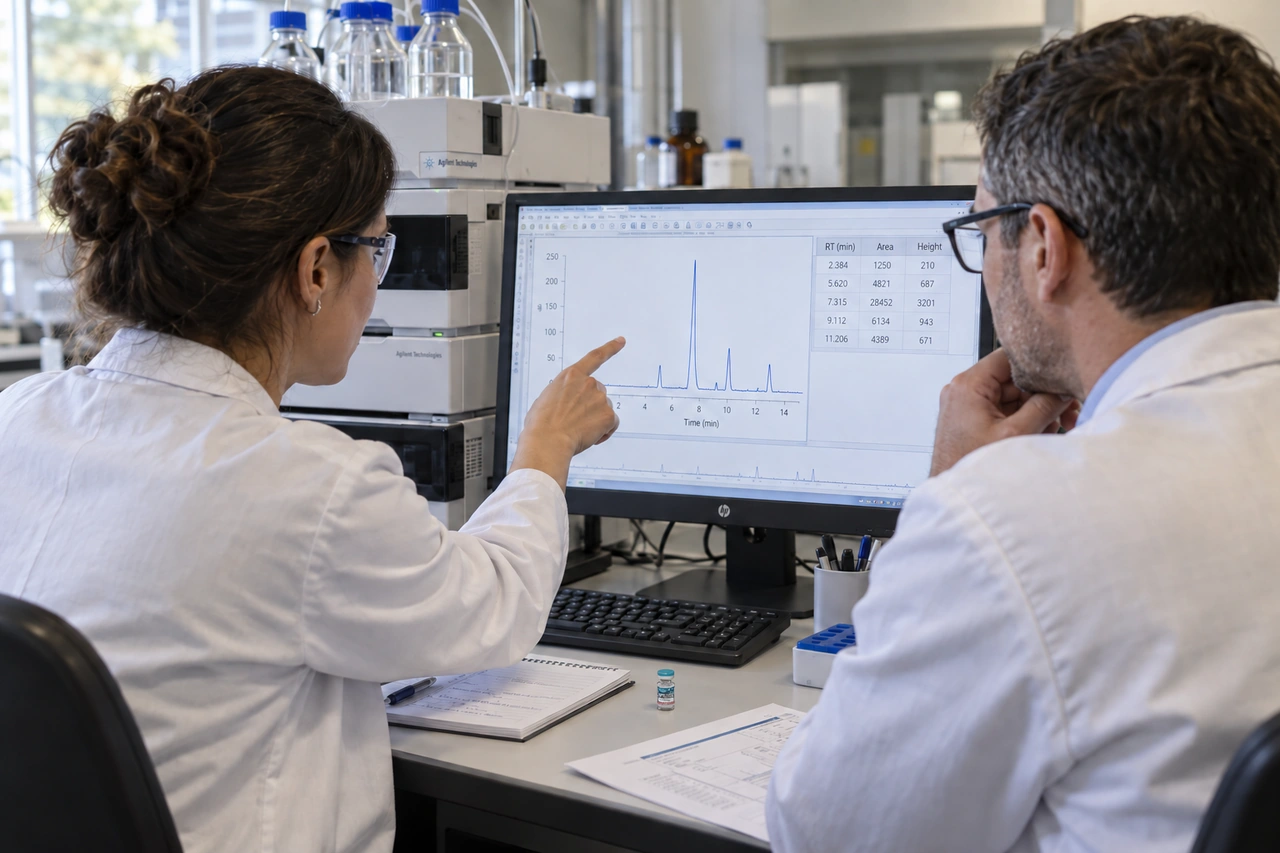
HPLC with UV detection, reported as the main peak’s share of the integrated area. Ask for the chromatogram, the detection wavelength and the integration settings, because each one changes the figure.
How many milligrams are in the vial?
A quantitative measurement of the peptide in the vial, usually by HPLC against a reference standard. Ask what basis the result is reported on, because counterions and water can change the number.
Endotoxin, elemental impurities and more
Bacterial endotoxin, elemental impurities such as lead and arsenic, water by Karl Fischer titration and counterion content are added when a method needs them. Under the GPC Verification Program, fees for optional panels are not credited.
How do you choose a laboratory?
Ask any laboratory these questions before you send a sample. A good one answers them in writing before you pay.
Which methods, on which instruments?
The report should name the technique, such as HPLC-UV or LC-MS, and give enough of the method for another laboratory to understand how each number was produced.
What is the quality system?
Accreditation to ISO/IEC 17025 means an accreditation body has assessed the laboratory’s competence for the specific tests in its scope. Check the scope, not only the logo. An unaccredited laboratory can still produce good data, but you will rely more on its method details.
Can the report be verified?
A report number, a named analyst or approver, and a public verification page let you, or a supplier, confirm that the report came from that laboratory unaltered.
How much sample, and how long?
Most peptide panels use a whole vial. Ask for the sample requirement, the current turnaround time and what happens to any unused material.
What will the report include?
Ask for the chromatogram and mass spectrum, not only the numbers, plus a photo of the vial as received and its lot number. Those details connect a result to your vial.
Why use a laboratory in Canada?
A domestic laboratory keeps the sample inside Canada. There is no export shipment, no customs declaration and no wait at a border, and the sample’s temperature history stays shorter and easier to document.
The practical details are simpler too: quotes and invoices in Canadian dollars, a laboratory you can reach in your own time zone, and domestic courier times for the sample.
The laboratories currently approved for the GPC Verification Program are Canadian and are listed on the program page. GPC also reviews requests to use another laboratory when a research team’s quality or compliance requirements call for one.
How do you prepare and send a sample?
Custody is what turns a report about a vial into a report about your vial. These steps keep that link intact.
- 01
Plan the timing first
Confirm the laboratory’s turnaround before you start. If you want GPC credit, request pre-approval in My Account and wait for written approval before sending anything; the final report must be dated less than 60 days after your order was delivered.
- 02
Photograph the vial as received
Photograph the sealed vial with its label and GPC lot number readable, beside the kit it came from. Record the date, how it has been stored since delivery and who has handled it.
- 03
Send it sealed
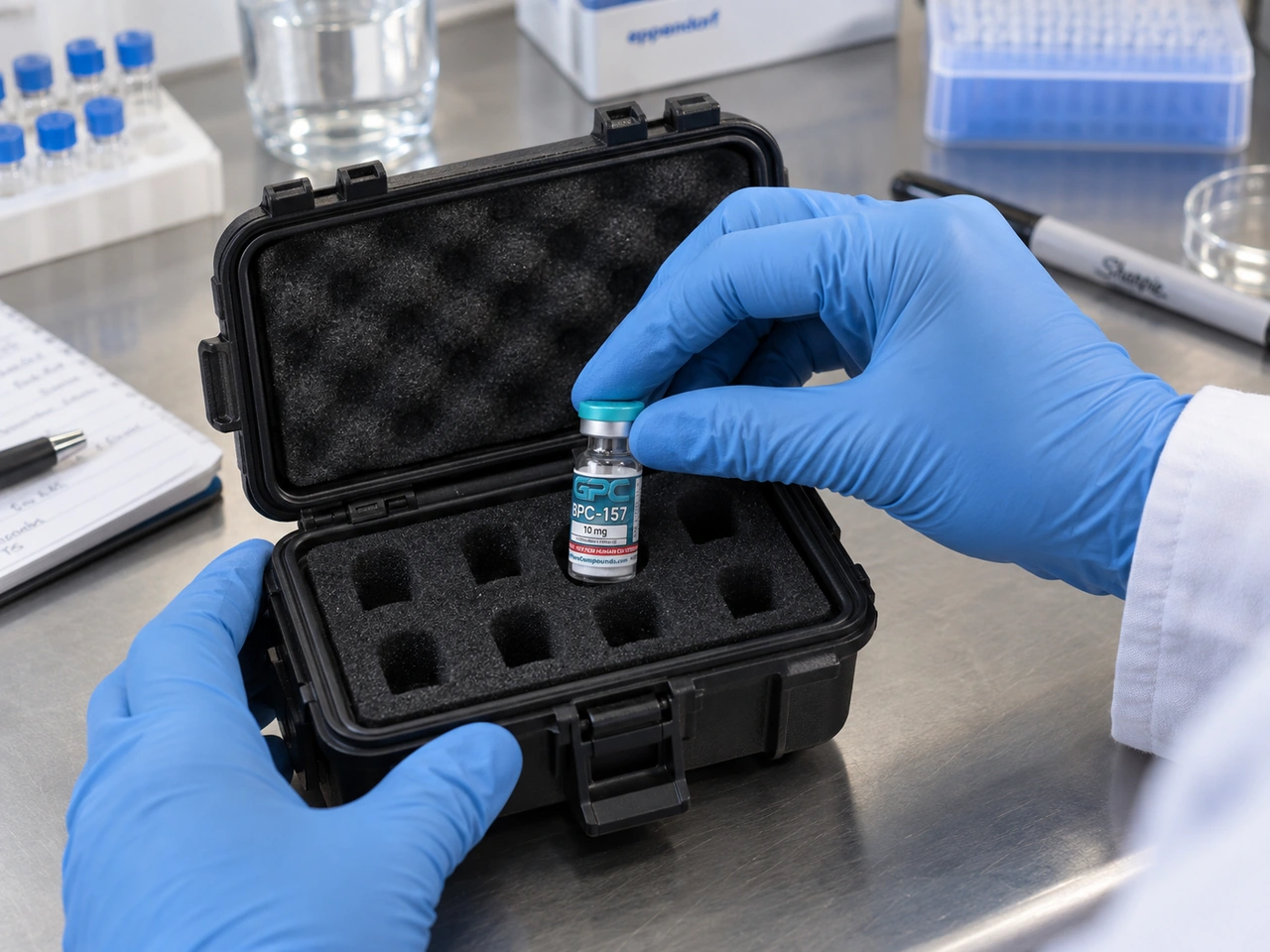
Send the original sealed vial with its label intact. Do not open, relabel or transfer the material. Pack it to protect the glass, and add cold packs in warm weather.
- 04
Tell the laboratory what to record
Ask for a photo of the vial as received and the GPC lot number on the report. For GPC credit, the client name on the report must be “Glacier Pure Compounds”.
- 05
Keep the paper trail
Keep the courier tracking, the laboratory’s invoice and the final report with its verification link. Those are the documents a credit review, an auditor or a colleague repeating the work will ask for.
What will the report tell you?
A report on your own vial is the most direct evidence you can have about it. It still has a boundary.
What that vial measured, that day
Identity, purity and amount for the vial that was analyzed, under the laboratory’s methods, on the date of analysis.
Every other vial in the kit
One result does not warrant the other vials in the kit or the lot. Vial-to-vial variation, handling and time still apply to them.
Match methods before comparing numbers
If your result differs from the lot’s published result, compare the methods, detection wavelength, integration and the basis of any amount before drawing a conclusion. Two sound results from different methods can disagree.
How does GPC credit the analysis?
The GPC Verification Program covers one vial per product, per order, from a 10-vial research kit. With written pre-approval, GPC credits the price you paid for the tested vial and the approved laboratory fees for identity, net content and purity to your account, toward a future order.
Analysis in your own laboratory with a method GPC approves in writing earns the vial credit only. If a validated report shows a qualifying failure, the affected SKU on that order is refunded in place of the vial credit, and approved standard testing fees remain account credit.
By submitting a report you allow GPC to publish it on the lot page, which adds evidence for every researcher who orders that lot after you. GPC does not identify you publicly without your permission. The program terms set out every condition.
Common questions about peptide testing in Canada.
How much does peptide analysis cost in Canada?
Prices vary by laboratory and panel, so ask for a written quote for each test. Under the GPC Verification Program, approved fees for identity, net content and purity are credited to your account, up to the maximum stated in your written approval.
How long does peptide testing take?
Turnaround depends on the laboratory’s queue and the panel. Ask before you send the sample, and allow for courier time in your plan. For GPC credit, the final report must be dated less than 60 days after your order was delivered.
Can I have a vial I bought individually analyzed?
You can commission analysis of any material you hold. The GPC Verification Program, however, only credits a vial from a purchased 10-vial research kit.
Does the laboratory need the whole vial?
Usually, yes. Most laboratories need the sealed vial so they can photograph it, record its lot number and measure the full contents for a net content result. Ask the laboratory for its sample requirements.
What if my result disagrees with the published lot result?
First compare the methods and the basis of each number. If the difference remains, contact GPC with the report. Under the program terms, a validated qualifying failure on an eligible vial means the affected SKU on that order is refunded.