
Peptide buyer’s guide for Canadian research and innovation
Buying research peptides in Canada.
Choosing a Canadian peptide source should not come down to whoever writes the most confident homepage. Here is what to check before you order, and how Glacier Pure Compounds answers every point in public: published lot results, pricing you can compare without asking, and a credit when you test a vial yourself.
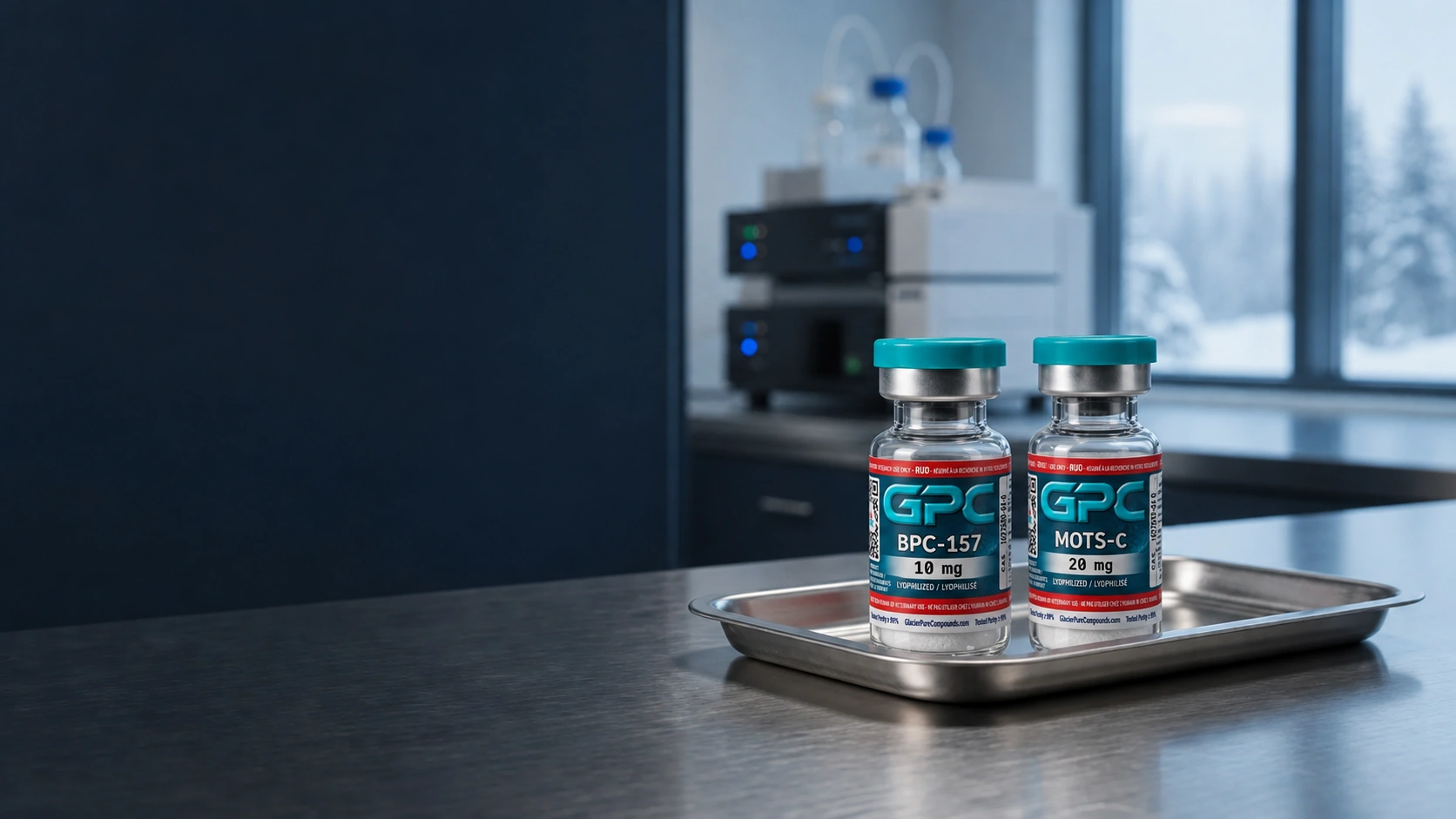
How do you tell Canadian peptide suppliers apart?
Search for research peptides in Canada and the results blur together. High purity. Third-party tested. Research grade.
Those phrases cost nothing to write, and not one of them tells you what is actually in the vial you receive, or what your true unit cost is once you account for the fill that vial was verified to hold.
Three things do:
- Third-party testing results for the exact production lot you would receive, not purity figures or certificates floating around a website with no way to map the vial in your hand back to the claim.
- Detailed price-per-milligram figures up front, so your team can compare like with like. A vial labelled 20 mg is less straightforward than it looks: suppliers commonly price against rounded fill amounts, and reported net content can differ from a nominal label amount. GPC publishes unit pricing from the labelled amount and, where the source certificate includes net-content data, publishes the laboratory-reported value separately so your team can evaluate both.
- A written answer to the awkward question: what happens if an independent test disagrees with the supplier?
Glacier Pure Compounds answers all three in a clear and transparent way, before you spend anything. The rest of this guide shows you how to use them, on our catalog and on everybody else’s.
Know what you are comparing
What the market often offers, and what GPC publishes instead.
Plenty of Canadian suppliers are careful and honest. But there are patterns worth recognising before you send anyone money, and we would rather you learned them here than the expensive way.
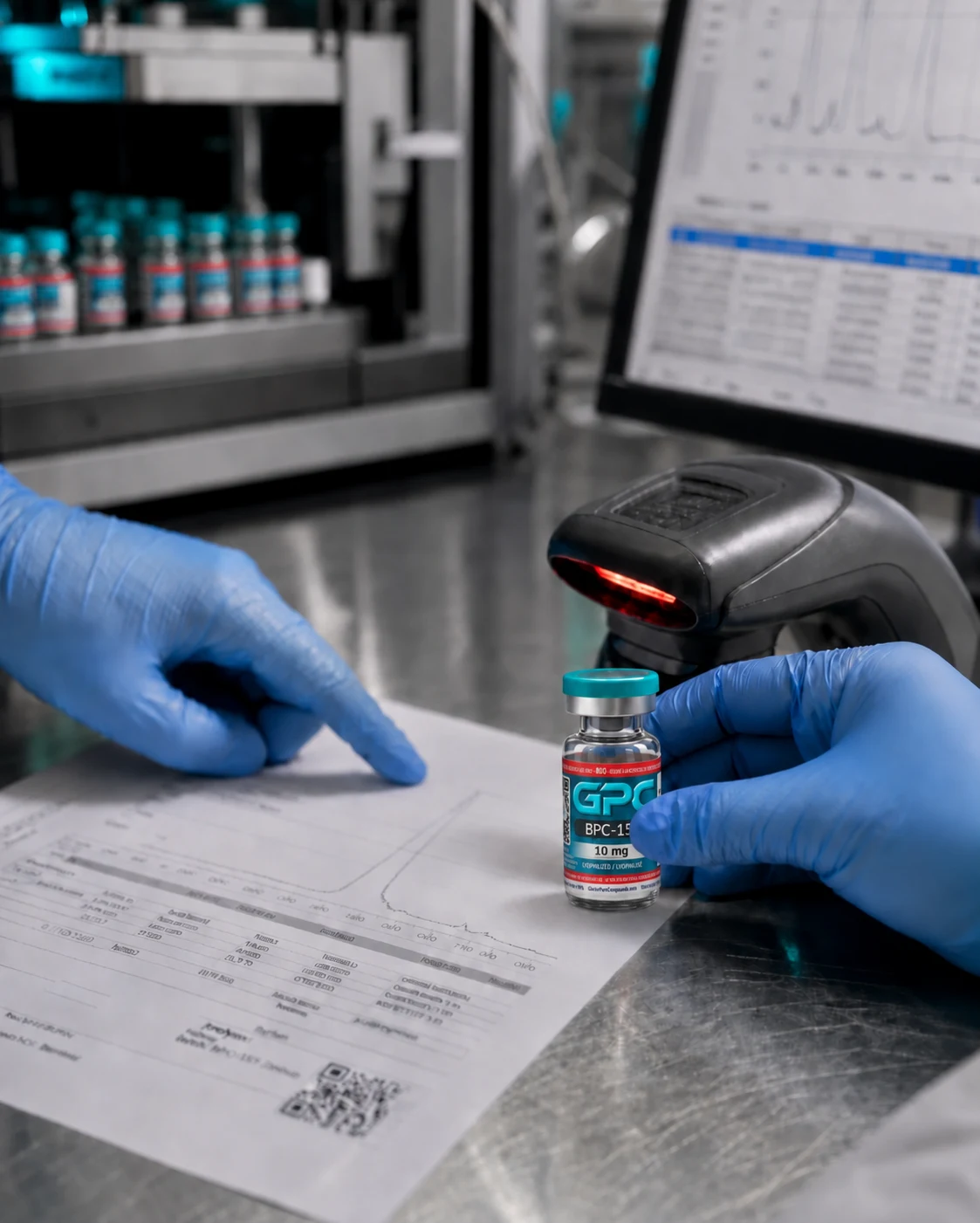
Test Results
Often in the market
One certificate on the homepage, or a purity figure with no document behind it at all. It may well describe a batch that sold out two years ago.
How GPC does it
Every product lot we offer publishes the available laboratory-reported results for its production batch, with the issuing laboratory named. The separate GPC Verification Program lets you commission analysis of a vial from your own order under written pre-approval.
Lot Identity
Often in the market
Nothing on the vial can be verified to map accurately to the testing data on the website. That critical link is at best a best-effort claim rather than a verifiable lot number tying the vial to its production batch and its testing results.
How GPC does it
A GPC lot number and QR code are printed on every vial and kit, and both lead straight back to that lot’s published results. Researchers get an accurate correlation between the vial, its contents and the testing result data. The check takes seconds, saves valuable research time, and supports strict inventory tracking and controls inside your lab.
Pricing
Often in the market
Vial pricing based on general vial amount values, with volume pricing that is complicated or absent altogether, leaving you to guess at the true per-milligram value you are getting.
How GPC does it
GPC publishes a transparent vial price, cost-per-milligram breakdowns and the full wholesale tier table on every product page. No quote request, no negotiation, no surprises. The GPC choice for quality and value is clear.
Where It Ships From
Often in the market
A .ca domain and prices in Canadian dollars do not always mean a Canadian company and a Canadian shipment. Duty, brokerage and conversion all arrive after checkout, and all have to be counted into your delivery timelines and your full end-to-end cost.
How GPC does it
GPC is a Canadian company shipping inside Canada. The number you compared is the number you pay, and Canadian warehouse stock typically moves in days. Even large wholesale orders going through our Distribution Center land in Canada for final verification and processing, and the last leg to our customers always ships from within Canada. There is no border examination, no brokerage, and no conversion after checkout. That is logistics, not a finding that the product is outside Health Canada’s reach.
Failed Quality Tests
Often in the market
Most other suppliers have nothing in writing. The question is rarely answered, or the terms leave you with no refund process at all: stuck with research material you cannot use, and stuck with the bill for it.
How GPC does it
GPC fully stands behind our products and encourages customers to test them for themselves. We have nothing to hide. We help you arrange pre-approval for one vial from a 10-vial research kit, then credit the vial and approved identity, net-content and purity laboratory fees to your account. A validated failure on identity, net content, purity below 99.00%, or an optional panel such as endotoxin or heavy metals, means that SKU is refunded under the program terms. Your research team gets confidence in the material and the peace of mind that its budget is not wasted if quality does not meet the standard.
What should a peptide supplier show you before you order?
Send these five questions to any Canadian peptide supplier you are considering, ours included. A good one will already have the answers on the page. If you have to ask, ask in writing, and notice how long the reply takes.
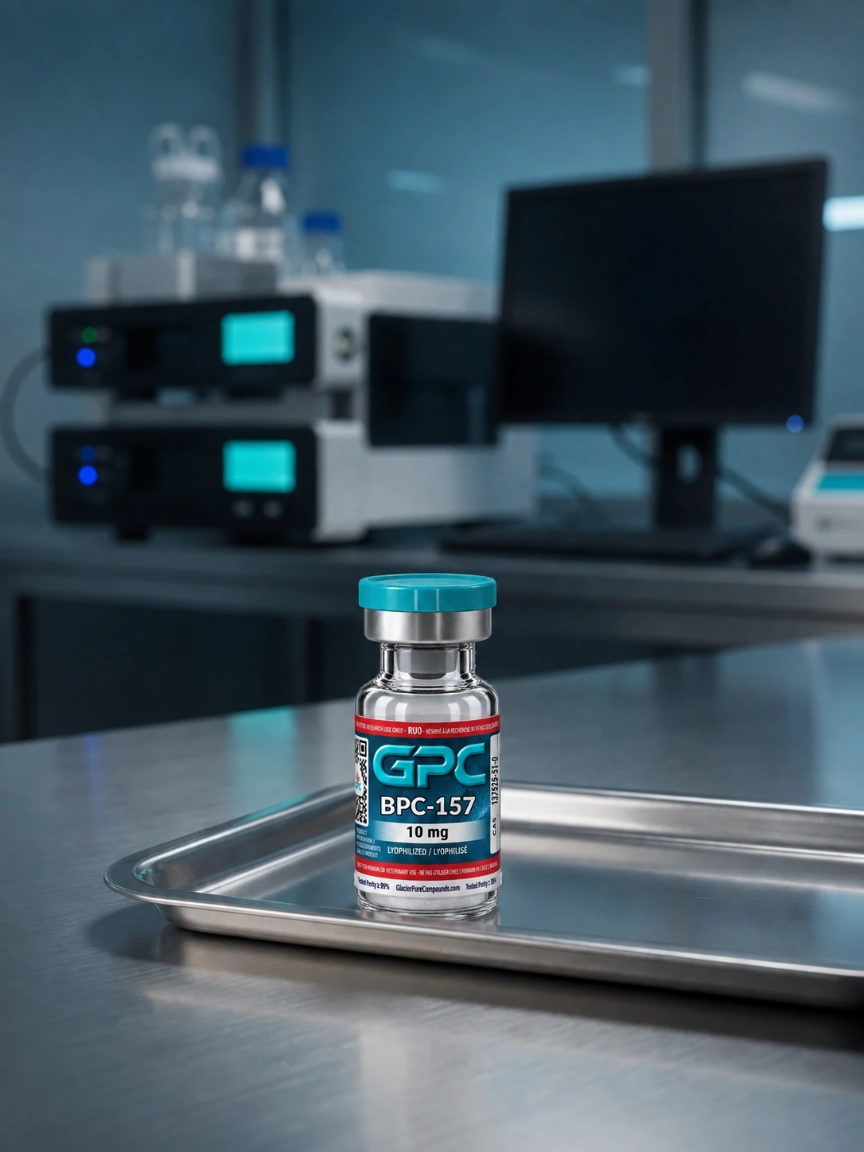
Which batch is this result from?
A laboratory result describes one production batch and nothing else. Ask whether the document belongs to the lot your vial will be filled from, and whether you can match that lot number once your order arrives. On every GPC lot page the manufacturer’s batch results sit under the same lot number printed on the vial and the kit, so the check is quick.
Who issued it, and can I check?
A named laboratory can be looked up and asked. An unattributed screenshot cannot. It is a small question that separates real evidence from decoration, and GPC names the issuing laboratory on every published lot result.
What does it cost per milligram?
A vial price hides the fill size. Two vials at the same price are not the same purchase when one holds five times as much. Ask for the per-milligram figure, or work it out before you compare. GPC prints it beside the vial price so you do not have to.
Where does it actually ship from?
Domestic and overseas orders are different purchases: transit time, whether the package meets a border examination, and whether there is anyone to reach when something goes wrong. GPC is a Canadian company shipping inside Canada: no border examination, no conversion after checkout.
What happens if it tests low?
This is the one worth asking first, because a specific written answer tells you more than any purity figure. Ours: with pre-approval, GPC credits one tested kit vial and approved identity, net-content and purity laboratory fees toward a future order, and a validated failure on a standard or optional panel means that SKU is refunded.
What does a certificate of analysis actually prove?
A COA is genuinely useful and genuinely limited, and knowing where that line falls is most of the skill. We publish lot results without pretending they describe the particular vial in your order. That is the honest version, and it is exactly why the verification program exists.
Something real about one batch
A laboratory reports what it measured in the sample it received, on the day it measured it. For the batch it names, that is solid information you can weigh before ordering, and a great deal more than a homepage adjective.
Anything about the vial in your hand
Your vial was not the sample analyzed. The result travels with the batch, not the vial, and says nothing about storage, transit or handling afterwards. A supplier who tells you otherwise is overselling the document.
A document with no lot identity
If nothing connects the certificate to a lot number you can read on the vial, the link is being asserted rather than shown. That is the document to set aside, and the supplier to ask one more question.
How do you compare peptide prices per milligram?
Fill sizes vary between suppliers and between products, so a vial price on its own tells you very little. A 5 mg vial at $40 and a 10 mg vial at $60 look like a $20 gap. Per milligram they are $8.00 and $6.00, so the higher sticker price is the better buy by a quarter.
Volume pricing adds a second layer, and this is where suppliers differ more than they let on. The question is whether the better rate applies to your whole order once you reach a threshold, or only to the kits above it. GPC uses attained tiers: every kit on that line uses the rate for the quantity ordered. Some products have the same rate across tiers. We publish the arithmetic on the product page instead of asking you to request a quote, because a price you cannot see is a price you cannot compare.
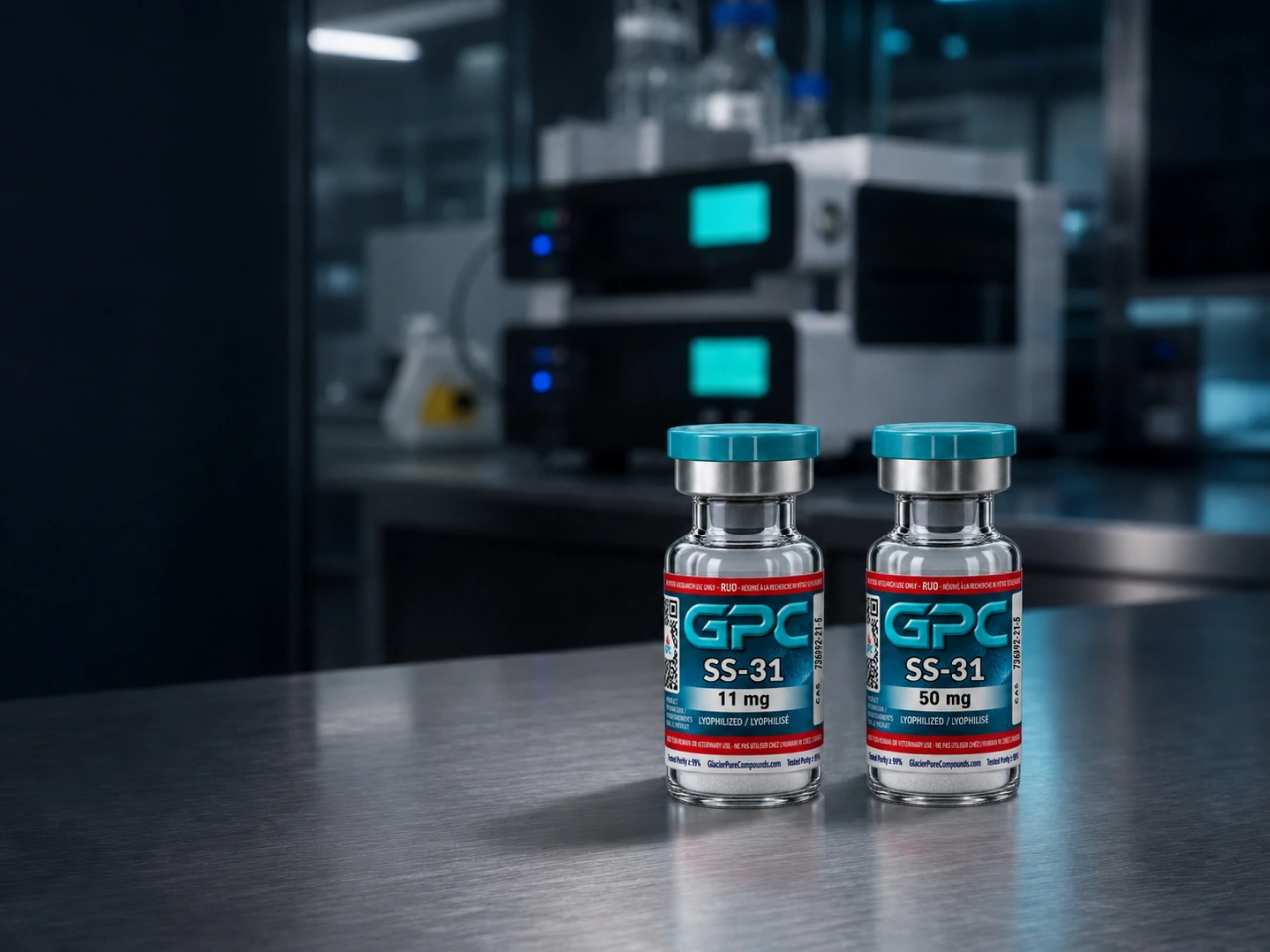
Why buy research peptides from a Canadian supplier?
Buying domestically is not sentiment. It changes the timeline, the landed cost, and who picks up the phone when something needs sorting out. A domestic shipment does not meet a border examination. That is logistics, not a finding that the product is outside Health Canada’s reach.
A Canadian company, a domestic shipment
GPC is Canadian, prices are in CAD, and your order ships inside Canada with no border examination. Canadian warehouse stock typically moves in days; planned kit volume follows the Distribution Center window of four to six weeks, stated on the product page before you commit to anything.
The landed price is the real price
Import duties, brokerage and currency conversion all land after the checkout total. A lower overseas list price can finish higher once the order actually arrives. With GPC, the number you compared is the number you pay.
Someone who answers
A Canadian seller is a Canadian legal entity, subject to Canadian consumer and advertising law, reachable in your own time zone and language. When something needs fixing, that matters more than it sounds like it should.
After your order arrives
How should research peptides be stored after delivery?
Cold-chain handling is the one part of quality a supplier cannot do for you. Once the package is signed for, storage and handling are what keep the material matching the results published for its lot, and they are the first variables an outside analysis will pick up. Four things to get right:
- 01
Check the lot number first
Match the lot number printed on the vial and the kit against the results published for that lot. Scanning the QR code on a GPC label takes you straight to them. If a package arrives warm or damaged, photograph it before you unpack, because that is the evidence any claim will rest on.
- 02
Keep it cold and keep it dark
Lyophilized material is held in the GPC Canadian warehouse at −20 °C or colder and shielded from ambient light. Matching those conditions in your own facility is the simplest way to keep what you received in the state it arrived.
- 03
Limit the freeze-thaw cycles
Every warm-up and refreeze is another handling variable working against you. Take out what a session needs, return the rest promptly, and let a vial come to temperature slowly rather than forcing it.
- 04
Analyze within the program window
Storage, transit and handling all sit between a batch result and your bench. Obtain written pre-approval and schedule the analysis so the final report is dated less than 60 days after delivery. Within that window, testing close to the planned research work makes the result more representative of the material at that point in time.
How do you verify the vials you actually received?
If you need evidence about a vial in your order rather than only the production batch, send a pre-approved vial to a laboratory. That result describes the tested vial at the time of analysis; it does not warrant the other vials in the order. No published batch document can describe that tested vial directly, ours included.
Most suppliers would rather you did not bother. We pay for it. Arrange pre-approval, send a vial, and GPC credits the vial plus approved laboratory fees to your account toward a future order. Testing in-house instead? You still get the vial credit. We would rather you checked than took our word for it, and the results you send back make the lot evidence stronger for every researcher who orders after you.
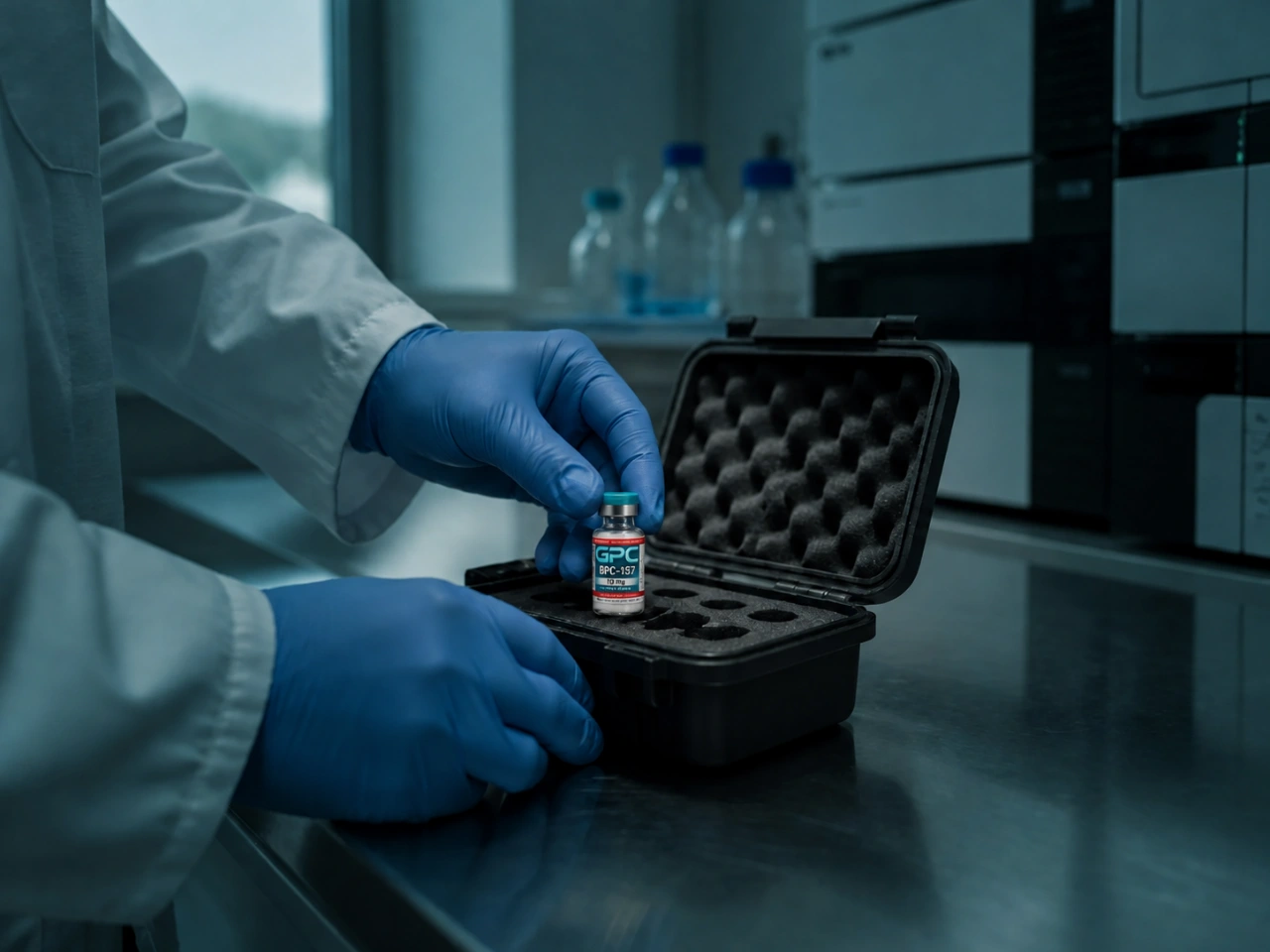
Go deeper
Three guides, one decision each.
When you want the long version, start here: what Canadian law actually says about research peptides, how to read a certificate of analysis field by field, and how wholesale peptide pricing works when the arithmetic is published rather than quoted.
What is actually on the shelf
What is listed in the GPC catalog?
Every listing in the GPC catalog is a named compound in one or more fill sizes, each tied to a production lot with published results and a lot number printed on the vial. Formats, availability, the vial price and the cost per milligram are on each product page before you order.
Compounds listed by name
BPC-157, GHK-Cu, MOTS-c, SS-31, NAD+, Epithalon, KPV, AOD9604, Kisspeptin-10 and DSIP each have their own product page, their own lot number and their own published batch results.
More than one format per compound
Many listings publish several fills, so a 10 mg vial and a 50 mg vial of the same compound sit side by side with the cost per milligram shown for each. The larger fill is usually the lower unit cost.
Ten vials to a kit
A research kit holds ten vials of one fill and carries the same lot number on the box and on every vial inside it. Published wholesale tiers apply to kits and the arithmetic is on the product page.
Multi-component listings
Some listings are supplied as blends under a GPC name, with each component and its strength stated on the product page and the same lot evidence standing behind them.
Availability changes as lots are released and withdrawn. A listing with no publishable supply-chain results is not offered for sale or pre-order.